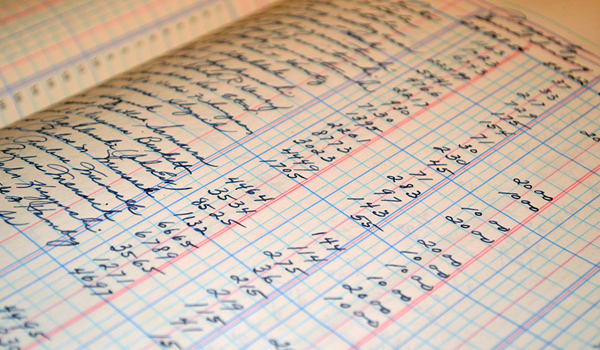

Most owners do not realise that half of what they pay for accounting is in their own hands. Take the same company with the same transaction volume: with vouchers filed neatly, the bookkeeping is quick and cheap; with receipts stuffed into a plastic bag and crumpled, the accountant spends twice the time sorting and the catch-up fee doubles. Organising vouchers is not administrative trivia — it is a discipline that saves real money.
This guide starts with the legal requirements — the six categories of records expressly listed in section 51C of the Inland Revenue Ordinance, when the seven years start running, and what electronic records must satisfy — and then builds a system you can actually keep running. We also share two ideas we have observed and rarely see mentioned: the cost of a voucher and filing for your future self. To hand the whole business over, see Stepcon's accounting service.
In this article
- 1. The underrated hidden cost
- 2. The rules and when seven years start
- 3. The six categories the law lists
- 4. Types of voucher
- 5. Going electronic, correctly
- 6. A four-step monthly method
- 7. Bank and cash
- 8. Naming and folder structure
- 9. When you can actually destroy records
- 10. Common mistakes
- Digital tools
- When to outsource
- FAQ
1. Organising vouchers is not just paperwork
Most articles teach you how to organise vouchers. Few ask why it matters. Understanding what disorder actually costs is what makes people do it properly.
Our view: every voucher carries a processing cost. Call it the cost of a voucher. Between the moment a document is created and the moment it is posted, there is a hidden processing cost. Note the purpose and file it immediately and that cost is close to zero. Push it into a drawer and try at year end to recall what a several-hundred-dollar receipt was for, and the cost rises geometrically. Accountants charge by time: your disorder ends up on your invoice.
Four losses from disorganised vouchers
- Money: disorder adds hours to the accountant's work, and the catch-up fee can exceed the basic bookkeeping fee.
- Tax: a lost expense voucher is a deduction forgone — you pay more tax than you needed to.
- Audit: insufficient evidence can bring a qualified opinion, affecting bank financing and investor confidence (see how to read an audit report).
- Opportunity: the days spent hunting for paperwork before the year end could have been spent on the business.
Our view: file for your future self. Another principle worth holding: the note you scribble on a voucher today saves the time of the person you will be three months from now, or during the audit. The enemy of good record keeping is never the volume of work; it is procrastination. Turn filing into a small daily or weekly habit and it beats a year-end rescue every time. This is why we keep stressing building accounting habits from day one.
2. What must be kept, and for how long
Before organising anything, know what the law requires. Hong Kong has clear rules on retaining business records; it is not a matter of preference.
The core provision: section 51C of the Inland Revenue Ordinance
Section 51C requires every person carrying on a trade, profession or business in Hong Kong to keep sufficient records in English or Chinese of income and expenditure to enable assessable profits to be readily ascertained, and to retain those records for at least 7 years after the completion of the transactions to which they relate.
Failure without reasonable excuse carries a fine of up to HK$100,000. The IRD's guide to keeping business records also stresses: even after you have ceased business, the duty to retain the records continues until the seven years expire.
An important correction: the two statutes count the seven years from different points. They are commonly conflated — including in an earlier version of this article. In fact:
| Provision | Applies to | Seven years run from | Penalty |
|---|---|---|---|
| Inland Revenue Ordinance s.51C | Any person carrying on a trade, profession or business in Hong Kong (unincorporated businesses included) | Completion of the transactions to which the records relate | Fine up to HK$100,000 |
| Companies Ordinance s.373 | Companies incorporated in Hong Kong | The end of the financial year to which the last entry in the records relates | The company and responsible persons are liable |
In practice: both apply, and the longer period governs. For a limited company the Companies Ordinance calculation is the safer basis — seven years from the end of that financial year.
The statutory exceptions
Section 51C has two exceptions: records the Commissioner has specified need not be kept, and records of a dissolved corporation. Beyond those, there is no "we're small so we don't have to" exception.
Note too that landlords letting property must keep corresponding records of rental income for the same seven years — do not assume the duty applies only to trading businesses.
3. The six categories the law lists
Most people know they must keep records but not that the law sets out a specific list. Here are the categories of business records listed in section 51C:
| # | Category | Practical examples |
|---|---|---|
| 1 | Books recording receipts and payments, or income and expenditure | General ledger, cash book, journals, accounting software ledgers |
| 2 | Underlying documents needed to verify the entries in those books | Vouchers, bank statements, invoices, receipts and other relevant documents |
| 3 | Records of the assets and liabilities of the business | Fixed asset register, loan agreements, receivables and payables listings |
| 4 | Records of all entries of money received and paid daily | Daily receipts and payments with supporting information |
| 5a | (Where goods are traded) all purchase and sales records | Showing sufficient detail for the Commissioner to verify quantity, value and the identity of buyer and seller, with all relevant invoices |
| 5b | (Where goods are traded) year-end statement of trading stock | Quantity and value of trading stock held at the year end, with the stocktaking records |
| 6 | (Where services are provided) records of the services | Showing sufficient detail of the services provided for the Commissioner to verify the entries |
The item most often missed: 5b, the stocktaking records. For trading and retail companies holding stock, the law expressly requires a statement of trading stock at the year end together with the stocktaking records. In practice many owners simply give the accountant an estimate with no counting documentation — one of the commonest reasons for a qualified opinion. The correct approach is to count physically on the year-end date, listing item, quantity and unit price, signed by the counter and a responsible officer.
4. Types of accounting voucher
"Vouchers" is a loose term; accounting records cover several kinds of document. Knowing the categories is how you avoid gaps.
Income
- Sales invoices and receipts
- Sales contracts and orders
- Receipt records (bank credits, cash received)
- E-commerce platform settlement reports (Shopify, Amazon, Taobao and others)
Expenditure
- Purchase invoices, supplier receipts and statements
- Rent, utilities, telecommunications and other operating expense vouchers
- Payroll records (payroll sheets, MPF contribution records, employment contracts)
- Professional fees (accounting, audit, legal)
- Advertising and platform commission invoices
Bank and other
- Monthly bank statements and transaction slips for every account, virtual banks, PayPal and Stripe included
- Incorporation cost documents (registration fee, chops, Business Registration Certificate)
- Asset purchase documents (contracts and invoices for equipment)
- Articles of association, annual returns and change filings
- Year-end stocktaking sheets, where applicable
Our view: small does not mean disposable. The mistake new owners most often make is deciding that a taxi fare or a stationery receipt is "too small to bother with". Those small deductible expenses add up considerably, and discarding them means paying more tax than you needed to. Our advice: keep too much rather than too little. Every business-related voucher is ammunition for a lawful deduction. Turning those expenses into deductions correctly also depends on accurate classification and filing.
5. Going electronic: allowed, but do not throw the originals away
The part of this subject people most often get wrong.
Electronic records are lawful
The IRD does accept business records kept in electronic form. The legal basis is section 8 of the Electronic Transactions Ordinance: where a rule of law requires information to be retained, it may be retained in electronic form provided three conditions are met:
- the information contained in the electronic record remains accessible for subsequent reference;
- the electronic record is retained in the format in which it was originally generated, sent or received, or in a format that can be demonstrated to represent that information accurately; and
- information enabling the identification of the electronic record's origin, destination, and the date and time it was sent or received is retained.
A key correction: you cannot discard the paper originals. The IRD's guide to keeping business records states expressly that business records kept on computer are acceptable, but original documents must still be retained — cheque stubs, invoices, bank pay-in slips and bank statements, for example — to evidence income and expenditure.
In other words the correct approach is scan electronically and keep the originals, in parallel — not scan and discard. The electronic copies make records findable; the originals prove they are genuine. Many articles are vague on this point (including an earlier version of this one), so we state it plainly.
Practical requirements for electronic filing
- Legibility: scans or photographs must be clear enough to read every detail — amount, date, supplier name, item
- Integrity: records must not be alterable after the fact, or any alteration must be traceable
- Retrievability: you must be able to produce specified records within a reasonable time when the IRD asks
- Stable format: use a common format such as PDF, avoiding proprietary formats that may not open years later
- Two backups: at least two storage locations (cloud plus local), so no single failure loses everything
6. A four-step monthly filing method
Principles and rules aside, here is a simple, practical method that works for paper and electronic records alike.
Step 1: file by month
The worst thing you can do is mix a year of vouchers together. File each month as a separate unit: a box file with monthly dividers for paper, and folders named 2026-01, 2026-02 for electronic copies. Filed monthly, the year end becomes a matter of stacking blocks rather than excavating.
Step 2: within each month, split income and expenditure
Inside each month's file, separate income from expenditure. Income holds sales invoices and receipt records; expenditure holds purchases and expense vouchers. It is a simple split that mirrors the structure of the income statement and lets the accountant post quickly.
Step 3: mount originals on A4 and note the purpose
Small receipts — taxi fares, meals — are easily lost and they fade; thermal paper receipts go blank within about two years, a genuinely common disaster. One simple action solves it: tape small receipts to a sheet of A4, note the purpose and the corresponding transaction by hand alongside, and scan a copy. It prevents loss and lets the accountant see at a glance what each item is, cutting the follow-up questions considerably.
Step 4: record immediately
The heart of the method is doing it now. Classify and note the purpose the moment the voucher arrives, while it is fresh. Leave it to the end of the month and you are relying on memory; leave it to the year end and it becomes archaeology. Make it a two-minute habit before you finish each day and it beats any rescue effort.
Our view: use the bank statement as a reverse checklist. An advanced technique rarely mentioned: each month, reconcile your filed vouchers against the bank statement line by line. The statement is the most objective record of truth, and every movement of money should have a matching voucher. Where a transaction has none, something is missing and should be chased immediately. Using the statement as a reverse checklist keeps your records complete, and it is what makes the later audit run smoothly.
7. Bank and cash: where things go wrong
In practice, banking and cash are where records most often descend into chaos. Get these two right and the books are half won.
Banking: build around the statement
File around the monthly bank statement, matching a voucher to every receipt and payment. Staple receipt evidence to the corresponding sales invoice and contract; staple payment evidence to the purchase invoice and contract. Every bank transaction then carries its full story and the audit needs no back-and-forth.
One more thing: keep the bank statement for the first month after the year end too — the auditor needs it to check subsequent events, such as whether the year-end receivables were actually collected.
Cash: where disorder hides
Cash transactions have no banking record to corroborate them, so they need particular rigour:
- Payroll: keep payroll sheets with employee acknowledgements and MPF contribution records (see payroll and MPF).
- Small reimbursements: expenses paid in cash should go on an expense claim form signed by the claimant and a responsible officer.
- Payments made by a director: where a director pays a company expense personally, complete and sign a record of the payment, so the position stays clear and company and personal money stay apart.
- Petty cash: set a fixed float and settle against vouchers on each top-up, so the balance reconciles at any time.
Our view: put the company's full name on the invoice. A detail that is frequently overlooked and enough on its own to make an expense unclaimable: when asking for an invoice, give the company's full name rather than an individual's or leaving it blank. An invoice made out to the company clearly evidences that the expense is the company's and not the owner's, which carries far more weight in the audit and the tax return. It is a small action that embodies why keeping company and personal money apart matters to bookkeeping.
8. Naming and folder structure
The problem with electronic filing is rarely whether something was saved but whether it can be found. Here is the structure we recommend to clients:
| Level | Naming | Example |
|---|---|---|
| Financial year | FY2026 (2025-04-01 to 2026-03-31) | One parent folder per year |
| Month | 2025-04 through 2026-03 | YYYY-MM, so the computer sorts them chronologically |
| Category | 01_Income, 02_Expenses, 03_Bank, 04_Payroll, 05_Other | Numeric prefixes fix the order |
| File | date_supplier or customer_amount_description | 20260415_ABCTrading_12500_OfficeRent |
Three small rules: use YYYYMMDD for dates rather than 15/4; write amounts without commas or currency symbols so they are searchable; and avoid special characters in filenames so files open across systems.
9. When can records actually be destroyed?
"When can I throw this out?" For a company with a 31 March year end:
| Financial year | Companies Ordinance s.373 start point | Earliest destruction |
|---|---|---|
| 2019/20 (to 31-03-2020) | 31 March 2020 | April 2027 |
| 2020/21 (to 31-03-2021) | 31 March 2021 | April 2028 |
| 2021/22 (to 31-03-2022) | 31 March 2022 | April 2029 |
Three things to check before destroying anything: first, whether that year's tax affairs are fully closed (no outstanding objection, appeal or enquiry); second, whether an offshore profits claim is involved — the IRD may raise questions on these years later, so keep them longer (see offshore profits exemption); and third, that permanent documents — articles of association, certificates, share registers, statutory registers — are outside the seven-year rule and should be kept indefinitely.
10. Nine common voucher mistakes
- Storing everything in a plastic bag or shoebox and tipping it out at the year end
- Not scanning thermal paper receipts, so the print vanishes within two years
- Keeping only the credit card statement without the actual purchase receipts (a statement proves you paid, not what you bought)
- Using one card for company and personal spending, so nothing can be separated at the year end
- E-commerce sellers keeping only the record of the platform's payout, without the settlement reports
- No year-end stocktaking record, only an estimate
- Invoices made out to an individual or left blank
- Electronic copies held on one computer with no backup
- Discarding everything the moment the business closes (records must be kept for the full seven years)
For a fuller list of accounting traps, see the top 10 accounting mistakes.
Digital tools
Since the IRD accepts electronic records, the right tools make the work far lighter. But tools are support; the method and discipline behind them still matter, and originals must still be kept.
- Phone scanning: scan paper vouchers as they arrive and file them by month, preventing loss and fading.
- Cloud storage: store electronic vouchers in the cloud, named to the convention above so they can be found later.
- Two backups: at least two storage locations, so a single device failure does not lose everything.
- Accounting software: higher-volume companies may consider Xero or QuickBooks to link vouchers to entries (for a comparison see cloud accounting vs an outsourced accountant).
A caution though: however advanced the software, it does not replace correct accounting judgement. Classifying vouchers, confirming what is deductible and preparing compliant statements still take professional knowledge.
When to outsource
Organising vouchers follows clear rules, but it still takes a busy owner's time and attention. In these situations, outsourcing is usually the smarter option:
- Transaction volume keeps rising and you are struggling to keep up
- You are unsure about classification and what is deductible, and worry about errors
- The year end is close and a large backlog of vouchers is unsorted
- You have received an estimated assessment or a penalty notice
- You want your time on the core business
Handing the filing and bookkeeping to a professional team saves time and keeps the accounts accurate and compliant, with a smooth handover to the audit and the return. The point is that you only need to do one thing — keep vouchers as they arrive — and leave the rest to professionals, at a cost lower than most people expect: for companies with low volume, SME bookkeeping at the year end starts at $900.
FAQ
How long must a Hong Kong company keep accounting vouchers?
Under section 51C of the Inland Revenue Ordinance, business records must be retained for at least 7 years after completion of the transactions to which they relate; failure to keep sufficient records without reasonable excuse carries a fine of up to HK$100,000. Note that section 373 of the Companies Ordinance counts from a different point — 7 years from the end of the financial year to which the last entry relates. In practice apply the longer.
Can I keep only electronic vouchers and discard the paper?
Not advisable, and possibly non-compliant. The IRD does accept electronic records (meeting the three conditions in section 8 of the Electronic Transactions Ordinance), but its guide to keeping business records states expressly that records kept on computer are acceptable but original documents must still be retained — cheque stubs, invoices, bank pay-in slips and bank statements — to evidence income and expenditure. Scan electronically and keep the originals.
What conditions must electronic records meet?
Under section 8 of the Electronic Transactions Ordinance: the information remains accessible for subsequent reference; the record is retained in the format in which it was originally generated, sent or received, or in a format demonstrably representing that information accurately; and information identifying the record's origin, destination and the date and time it was sent or received is retained. In practice: legible, tamper-evident and retrievable.
Which business records does the law list?
Books recording receipts and payments or income and expenditure; the underlying documents needed to verify those entries — vouchers, bank statements, invoices, receipts; records of the business's assets and liabilities; records of all money received and paid daily; where goods are traded, all purchase and sales records (with enough detail for the Commissioner to verify quantity, value and the identity of buyer and seller) with all relevant invoices, plus a year-end statement of trading stock and the stocktaking records; and where services are provided, records showing sufficient detail of those services.
Do I need to keep very small receipts?
Yes. Small deductible expenses add up considerably, and discarding them forgoes lawful deductions and means paying more tax. The principle is to keep too much rather than too little — every business-related voucher supports a deduction.
Can an invoice be made out to me personally?
Use the company's full name wherever possible. An invoice made out to the company clearly evidences that the expense belongs to the company rather than the owner, which carries more weight at audit and on the return, and helps keep company and personal money apart.
Do disorganised vouchers increase my accounting fee?
Yes. Accounting and audit fees are generally charged by time, and disorder adds hours of sorting and chasing; the catch-up fee can exceed the basic bookkeeping fee, the audit quote rises, and insufficient evidence can bring a qualified opinion. Monthly filing and immediate recording keep the overall cost down.
The business has closed — do I still need to keep the vouchers?
Yes. The IRD states clearly that even after ceasing business, the duty to retain the records continues until the seven years expire. The exceptions in section 51C are limited to records the Commissioner has specified need not be kept, and records of a dissolved corporation.
Do I need every month's bank statement for the year?
Yes, and for every account — traditional banks, virtual banks and payment platforms such as PayPal and Stripe. Bank statements are the auditor's principal independent evidence and the best reverse checklist for whether your vouchers are complete. In practice, keep the statement for the first month after the year end too, so the auditor can check subsequent events.
How do I know whether anything is missing?
Reconcile against the bank statement. Every line of receipts and payments on the statement should have a matching voucher; where one does not, something is missing and should be chased immediately. Done monthly, this keeps your records complete and makes the audit far smoother.
Organised vouchers are the first step to saving money
Organising accounting vouchers looks like a chore and is in fact a discipline that saves both money and time. Remember the two principles — the cost of a voucher, and filing for your future self — understand the six categories listed in section 51C and the different starting points for the seven years, then apply the four-step monthly method, a proper naming convention and rigorous handling of banking and cash, and your records go from chaos to order. All you need to do is keep vouchers as they arrive; the professional work can safely be handed over.
Stepcon Business Services works on the principle of lowering our clients' running costs, offering affordable, professional support across bookkeeping, audit arrangement, tax filing and company secretarial work. Accounting from HK$200 a month, to cut your costs and keep you compliant.
Vouchers piling up and no idea where to start? Get in touch: call 3687-1127 or message us on WhatsApp / WeChat at 9700-6312 for a free consultation and an accurate quote.